Operational visibility
Leads, bookings, jobs and balances can be reviewed inside the same system, giving management a clearer view of the work.
Customers, vehicles, quotes, bookings, workshop jobs and finances, brought into one operating system. Built so the team can see what needs to happen next without searching through spreadsheets and messages.
The delivered platform is the evidence here. Revenue, time-saving and booking improvements have not yet been verified.
SVK’s customer and vehicle information was spread across spreadsheets, messages and individual memory. An enquiry, a quote, a booking and a payment could all refer to the same job without being connected.
That made the next action harder to see. Staff had to find the context, management had to piece together the operation, and MOT or service follow-ups depended on somebody remembering.
SYN Labs built a shared platform around the full customer journey, giving the public website, the customer and the internal team a connected view of the work.
One customer journey runs through the public website, My SVK Garage and the internal operating system.
Vehicle details, requested services and tuning information give the team context before preparing a response. Leads follow a defined process instead of disappearing into separate conversations.
Itemised quotes keep prices, deposits and balances visible. Bookings, schedules and technician assignments connect the agreed work to the people who will deliver it.
Jobs bring together checklists, notes, media and verified results. The customer and vehicle context stays attached as the work moves from booking through completion.
Payments, expenses and financial reporting sit alongside the operation. MOT and service reminder records create a clear route to the next visit, with customer access through My SVK Garage.
This diagram describes the delivered operating model. Specialist AI agents are a planned extension, not a claim that every step already runs autonomously.
Existing captures of the SVK website show how customers find a service, send useful details and access their private garage.
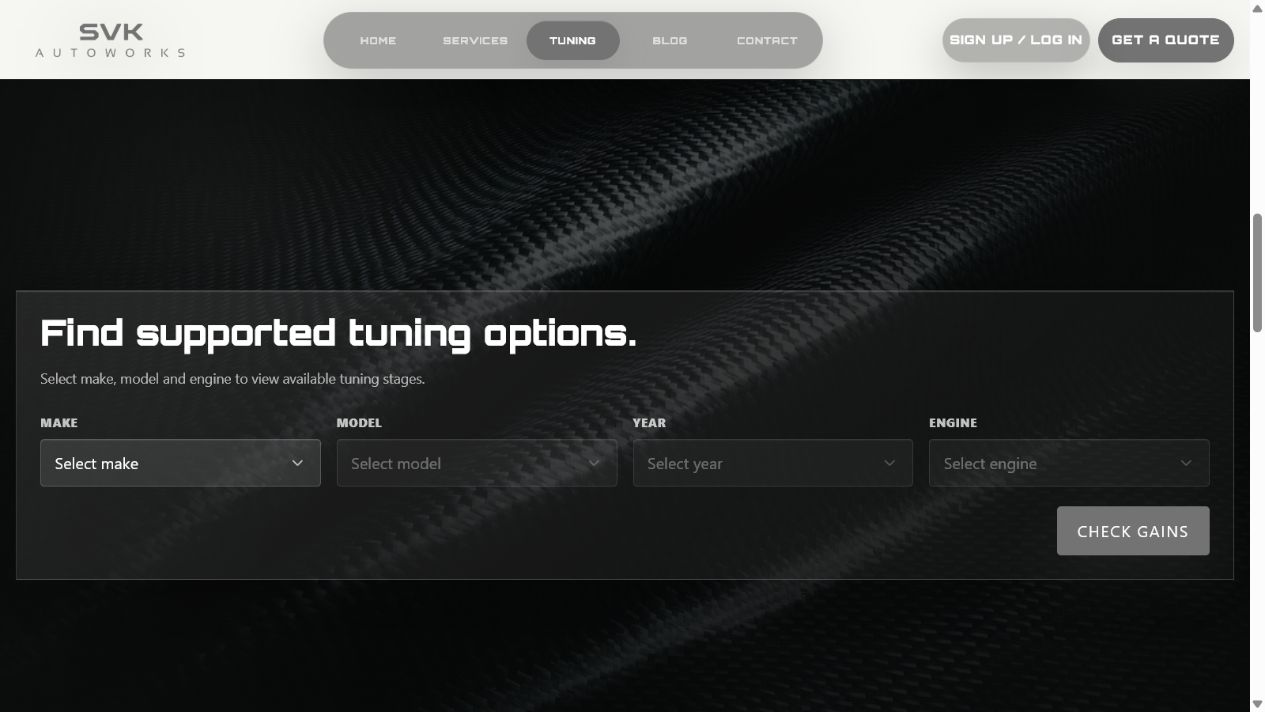
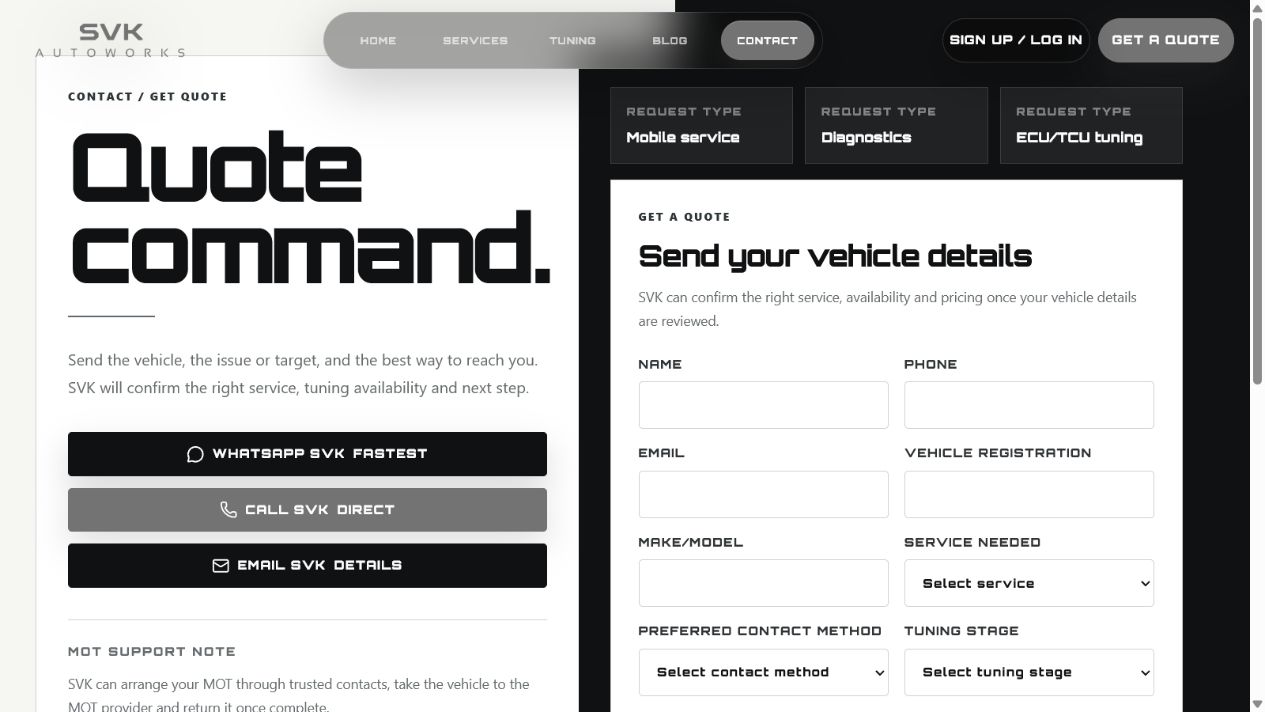
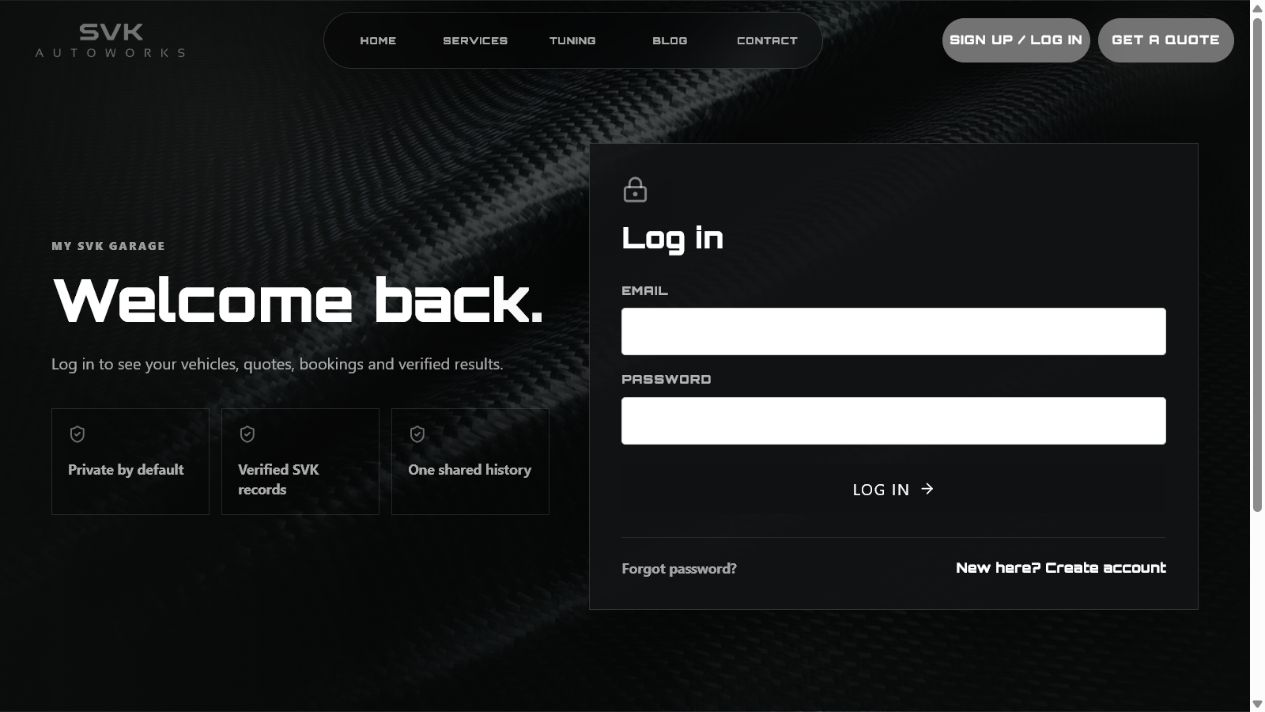
The strongest outcome is structural: the work now has a lifecycle, the records stay connected and management can see what needs attention.
Leads, bookings, jobs and balances can be reviewed inside the same system, giving management a clearer view of the work.
A vehicle’s history stays connected across visits. Customers have a private place to access their vehicles, quotes and bookings.
Permissions and audit history make responsibilities and changes traceable as more people work in the business.
These are capabilities of the delivered platform. Measured changes in response time, quote turnaround, bookings and administrative hours are not yet established.
Reliable records and clear rules give future agents the context to do useful work. The platform creates that foundation first.
These are proposed extensions. Pricing, refunds and sensitive customer decisions would remain subject to human approval.
We had quite a lot running through messages and spreadsheets. It worked, but you’d sometimes have to check a few different places just to find out what was happening with a car or a booking.
SYN Labs brought that together for us. Now we can open a job, see the customer’s details, check what’s been quoted and know what needs doing next. Having the customer portal connected to that is useful too.
The biggest thing for us is being able to keep on top of the work without having to ask around for every update. There’s a clear place to find things, and it’s much easier for someone else on the team to pick up a job and know where it stands.
No. The website is one part of the delivery. It connects to a customer portal and an internal operating system covering leads, vehicles, quotes, bookings, jobs and finances.
The source project brief describes specialist agents as the next stage. This case study distinguishes the delivered platform from proposed agent workflows.
The project notes contain projections, but not verified operating results. We have kept those projections out of the result claims. A meaningful measurement would compare response times, quote turnaround, admin hours and booking conversion before and after.
If the customer journey breaks between the enquiry, the booking and the work itself, let’s map those gaps and find the right place to start.
Discuss your project 30-minute workflow diagnosis. No obligation.